
Cantonese Chow Mein

A classic Hong Kong–style chow mein with thin egg noodles crisped to golden edges, tossed with scallions, bean sprouts and a savory soy-oyster sauce that sings of Cantonese home kitchens.
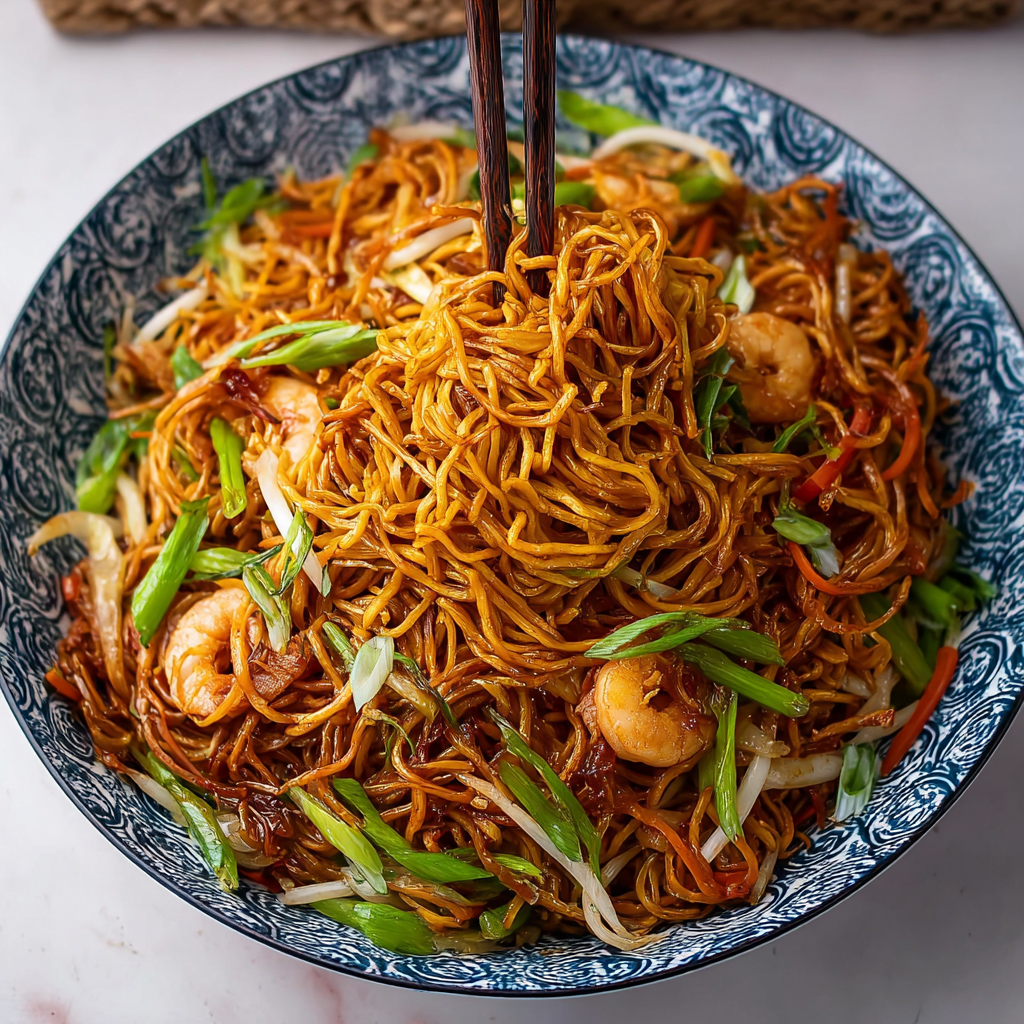
This Cantonese chow mein has been a weekday favorite in my kitchen ever since I first tasted the crisp-edged version at a tiny family-run eatery in Hong Kong. I discovered the technique of briefly soaking the thin, fresh egg noodles and then pan-frying them until they develop golden, lacy edges on a trip years ago. The contrast between the slightly chewy interior of the noodles and the crunchy crust is what makes this dish unforgettable. I brought that memory home and refined the process so it works on a busy weeknight without sacrificing texture or flavor.
What makes this preparation special is the layering: a simple, briny sauce of dark soy, regular soy, oyster and fish sauce clings to the noodles while the scattered crisp vegetables and scallions add freshness and snap. The dish is quick to assemble, uses pantry-friendly condiments, and rewards a small amount of technique with impressive results. It’s one of those recipes that feels celebratory and comforting at the same time—perfect for a solo dinner, family meal, or to serve at potlucks when you want something crowd-pleasing but not fussy.
Why You'll Love This Recipe
- Ready in about 20 minutes from start to finish, perfect for busy weeknights yet impressive enough for guests.
- Uses pantry staples like soy and oyster sauce; no specialty ingredients beyond Hong Kong–style thin egg noodles.
- The noodles are soaked then shallow-fried to achieve a crisp exterior and chewy interior—textures that elevate simple ingredients.
- Customizable: add shrimp, chicken or tofu for extra protein, or keep it vegetarian by swapping oyster and fish sauces.
- Make-ahead friendly: components can be prepped earlier and finished quickly; ideal for meal prep or batch cooking.
- Minimal equipment and a short ingredient list mean you can focus on technique rather than sourcing rare items.
I remember the first time I served this to my family—my partner declared it "restaurant-level," and my teenager asked for thirds. It’s the combination of a few disciplined steps that makes the difference: correct noodle handling, hot oil in the wok, and a well-balanced sauce. Every time I make it, I discover little adjustments—more dark soy for color, a whisper more sesame oil at the end—that nudge the dish closer to perfect.
Ingredients
- Chow mein egg noodles (12 oz / thin, Hong Kong style): Seek fresh, thin egg noodles labeled "chow mein" or "Hong Kong style" at Asian markets. They soften quickly with hot water and crisp beautifully when pan-fried.
- Yellow onion (½ small, thinly sliced): Use a sweet yellow onion for mild caramel notes; slice thin so it softens quickly and integrates with the noodles without losing texture.
- Green onions (5 stalks, 2-inch pieces): Divide whites and greens; whites give savory punch in early sauté, greens add freshness at the end. Look for firm, bright stalks.
- Bean sprouts (2 cups): Rinse and drain well; they add crunchy, juicy contrast. Use mung bean sprouts for authentic texture and quick cooking.
- Corn oil (3 tablespoons or any neutral oil): Neutral oils with high smoke points are best for quick, hot pan-frying—vegetable or canola work too.
- Sesame oil (1 teaspoon to finish): A finishing drizzle for aroma—do not use for high-heat frying. Toasted sesame oil elevates the umami of the sauce.
- Sauce components: Dark soy, regular soy, oyster sauce, fish sauce, sugar and water—these combine to give color, salt, sweet and savory depth. Measure precisely for balance.
Instructions
Soften the noodles: Bring a kettle or pot of water to a rolling boil. Place the fresh thin egg noodles in a large heatproof bowl and pour the boiling water over them just until they relax and soften—about 30 seconds to 1 minute. Avoid soaking longer or they will become soggy. Drain immediately in a colander and toss with a few drops of oil to prevent sticking. Set aside while you prepare the sauce and vegetables. Prepare the sauce: In a small bowl, whisk together 1 tablespoon dark soy sauce, 1 tablespoon regular light soy sauce, 1 tablespoon oyster sauce, 1 teaspoon fish sauce, 1 teaspoon granulated sugar and 2 tablespoons water. Stir until sugar is fully dissolved. Taste briefly: it should be savory-sweet with a deep color—adjust light soy to soften saltiness if needed. Sauté aromatics: Heat 1 tablespoon corn oil in a wok over medium-high heat until it shimmers. Add the thinly sliced yellow onion and the white parts of the green onions and stir-fry for about 1 minute until softened and fragrant but not browned. Remove the aromatics and set aside; they will finish the dish with gentle sweetness. Pan-fry the noodles: Return the wok to medium-high heat and add another tablespoon of corn oil. When the oil is very hot (but not smoking), add the drained noodles and spread them into an even, thin layer across the wok bottom. Let them cook without stirring for roughly 2 minutes to develop a light crust. Using a spatula, flip sections of the noodle mass, then drizzle the remaining tablespoon of oil around the perimeter to help crisp the underside. Cook about 2 more minutes until you have golden, slightly lacy edges. The goal is contrast: crisp exterior, tender core. Add vegetables and sauce: Return the cooked onions and white scallion pieces to the wok along with the green parts of the scallions and the bean sprouts. Pour the prepared sauce over the noodles and gently toss or fold to coat evenly—about 1–2 minutes. Use quick, controlled movements so you don’t break up the crisp noodles too much. Taste and adjust seasoning with more soy or a pinch of sugar if needed. Finish and serve: Once everything is combined and heated through, remove the wok from heat. Drizzle with 1 teaspoon sesame oil, toss briefly, and transfer to a warmed serving platter. Serve immediately so the crisp edges remain texturally distinct.
You Must Know
- This dish freezes poorly once assembled; best to store components (noodles and sauce separately) if making ahead.
- High in carbohydrates and moderate in protein; bean sprouts add freshness and lower perceived heaviness.
- Prepare the sauce and slice aromatics ahead of time to cut final assembly to under 10 minutes.
- Use a wide, hot wok for the best crisping surface area; a nonstick skillet can work but will not mimic wok textures exactly.
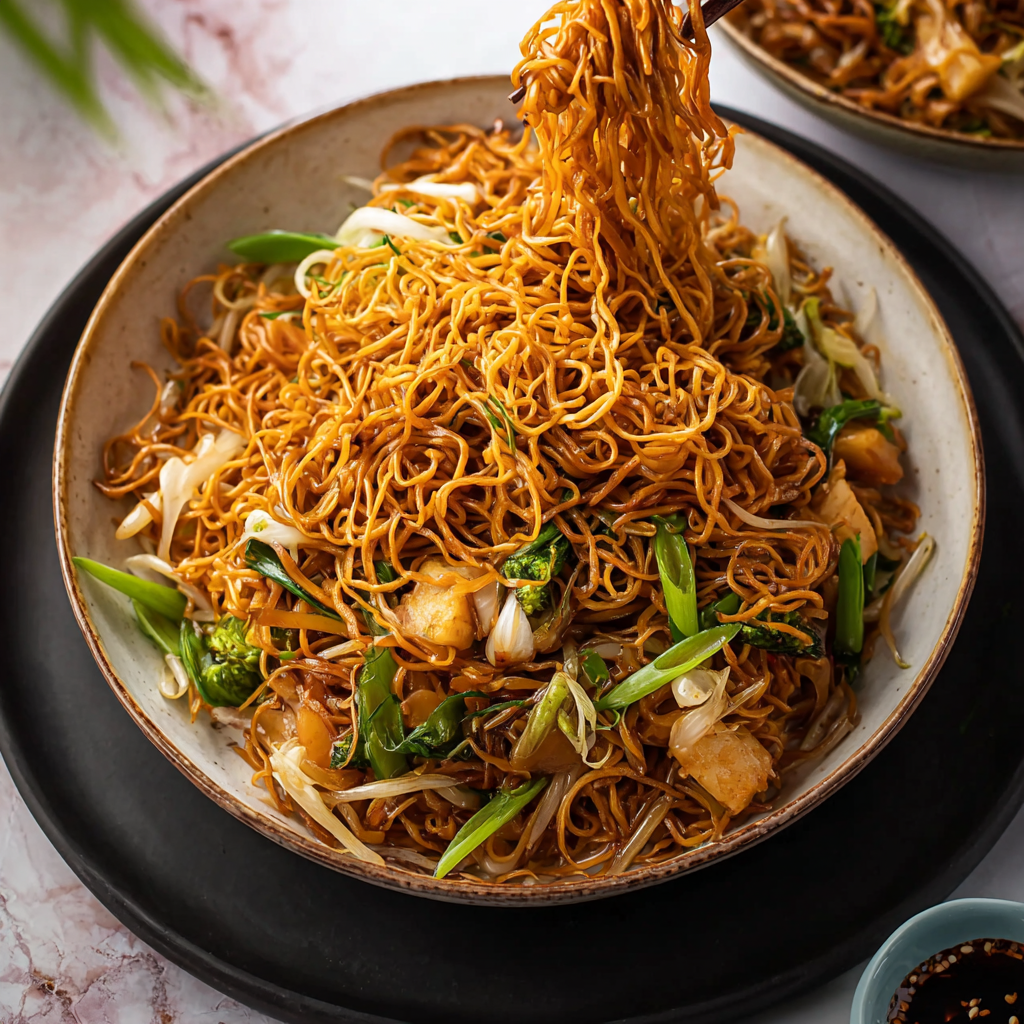
What I love most about this version is the simplicity: a handful of inexpensive, shelf-stable sauces combine to create a deep, layered taste. Family and friends often remark that it tastes like takeout but better, because the noodles retain that ideal chew and the vegetables stay bright. Over the years I’ve learned that the small technique of spreading the noodles thin in a hot pan is the single most important step—get that right and everything else falls into place.
Storage Tips
Leftover assembled chow mein will lose its crispness in the fridge. For best results, store cooked noodles and vegetables separately in airtight containers for up to 2 days. If you must refrigerate the fully assembled dish, reheat briefly in a hot skillet with a splash of oil to try and re-crisp the edges—about 2–3 minutes per side over medium-high heat. Do not freeze the finished noodles; the texture will become gummy. If you want to freeze, cool components quickly, place sauce in a sealed container for up to 3 months, and freeze par-cooked proteins separately.
Ingredient Substitutions
Short on Hong Kong–style egg noodles? Use thin dried egg noodles rehydrated according to package directions, or substitute thin spaghetti in a pinch—adjust soaking and pan-fry time. Replace oyster sauce with mushroom oyster sauce or extra soy for a vegetarian version; omit fish sauce or use soy-based umami seasoning if avoiding shellfish. For gluten-free diners, swap in rice vermicelli and gluten-free soy and oyster alternatives, but know the texture will differ. Use neutral oil alternatives such as canola or peanut (watch for nut allergies).
Serving Suggestions
Serve this dish family-style straight from the wok with extra sliced scallions and a small dish of chili oil or sambal on the side for heat. It pairs beautifully with a simple cucumber salad or steamed gai lan for color and bitterness. For an indulgent meal, offer pan-seared prawns or char siu on the side. Garnish with toasted sesame seeds or a few drops of black vinegar for brightness. Serve alongside jasmine rice if you want to bulk the meal for larger appetites.
Cultural Background
Chow mein traces its roots to northern China but became a Cantonese staple in Hong Kong where vendors refined thin, crisped noodles and the light soy-oyster sauces common in Cantonese cuisine. Cantonese cooking favors balance—salty, sweet, bright aromatics—and quick high-heat wok work to preserve texture. The technique of briefly soaking fresh noodles before flash-frying is a hallmark of Hong Kong–style stalls where texture matters as much as flavor.
Seasonal Adaptations
In spring, increase the ratio of bean sprouts and add blanched snow peas for fresh crunch. Summer versions benefit from a squeeze of lime and a handful of herbs like Thai basil. In autumn and winter, incorporate quick-seared mushrooms or thinly sliced roasted pork for heartier notes. Adjust the sauce slightly darker in colder months with a touch more dark soy for warmth and color.
Meal Prep Tips
To speed evening assembly, soak and drain noodles and store in a lightly oiled container in the fridge for the same day. Slice onions and scallions and mix the sauce in advance. If adding protein, precook and refrigerate separately; reheat in the wok with a splash of oil before adding noodles. Use shallow, wide containers for quick chilling and reheat in a hot skillet for best texture recreation.
Every time I make this chow mein I’m reminded of that small Hong Kong stall and the power of technique over complexity. Keep a jar of good oyster sauce and both dark and light soy on hand—they’ll change how you cook quick Asian-inspired meals for years to come. I hope this version becomes a staple in your rotation as it is in mine: fast, flavorful and full of texture.
Pro Tips
Soak fresh thin egg noodles only 30 seconds to 1 minute in boiling water to avoid sogginess.
Spread noodles thin in a hot wok and let them sit undisturbed for 1–2 minutes to develop a crisp crust.
Finish with toasted sesame oil off the heat for aroma; don’t use sesame oil for high-heat frying.
Prepare the sauce and slice aromatics ahead to make the final assembly under 10 minutes.
If the noodles stick, use a thin spatula and a little more oil around the perimeter to release and crisp.
This nourishing cantonese chow mein recipe is sure to be a staple in your kitchen. Enjoy every moist, high protein slice — it is perfect for breakfast or as a wholesome snack any time.
Tags
Cantonese Chow Mein
This Cantonese Chow Mein recipe makes perfectly juicy, tender, and flavorful steak every time! Serve with potatoes and a side salad for an unforgettable dinner in under 30 minutes.
Instructions
Soften the noodles
Place fresh thin egg noodles in a heatproof bowl and pour boiling water over them for 30 seconds to 1 minute until they relax. Drain thoroughly and toss with a few drops of oil to prevent sticking. Set aside.
Mix the sauce
Whisk dark soy, light soy, oyster sauce, fish sauce, sugar and water in a small bowl until sugar dissolves. Taste and adjust balance between salty and sweet.
Sauté aromatics
Heat 1 tablespoon corn oil in a hot wok. Add sliced yellow onion and white parts of green onions; stir-fry about 1 minute until fragrant and softened. Remove and reserve.
Pan-fry noodles
Heat another tablespoon of oil in the wok over medium-high heat. Add drained noodles and spread into a thin layer. Let sit 1–2 minutes to form a crisp bottom, flip sections, add remaining oil around the perimeter, and crisp for another 2 minutes.
Combine and finish
Return reserved onions, add green scallion pieces and bean sprouts. Pour sauce over noodles and gently toss 1–2 minutes until heated and coated. Remove from heat, drizzle sesame oil, toss and serve immediately.
Last Step: Please leave a rating and comment letting us know how you liked this recipe! This helps our business to thrive and continue providing free, high-quality recipes for you.
Nutrition
Did You Make This?
Leave a comment & rating below or tag
@festive-cooks on social media!
Categories:
You might also like...
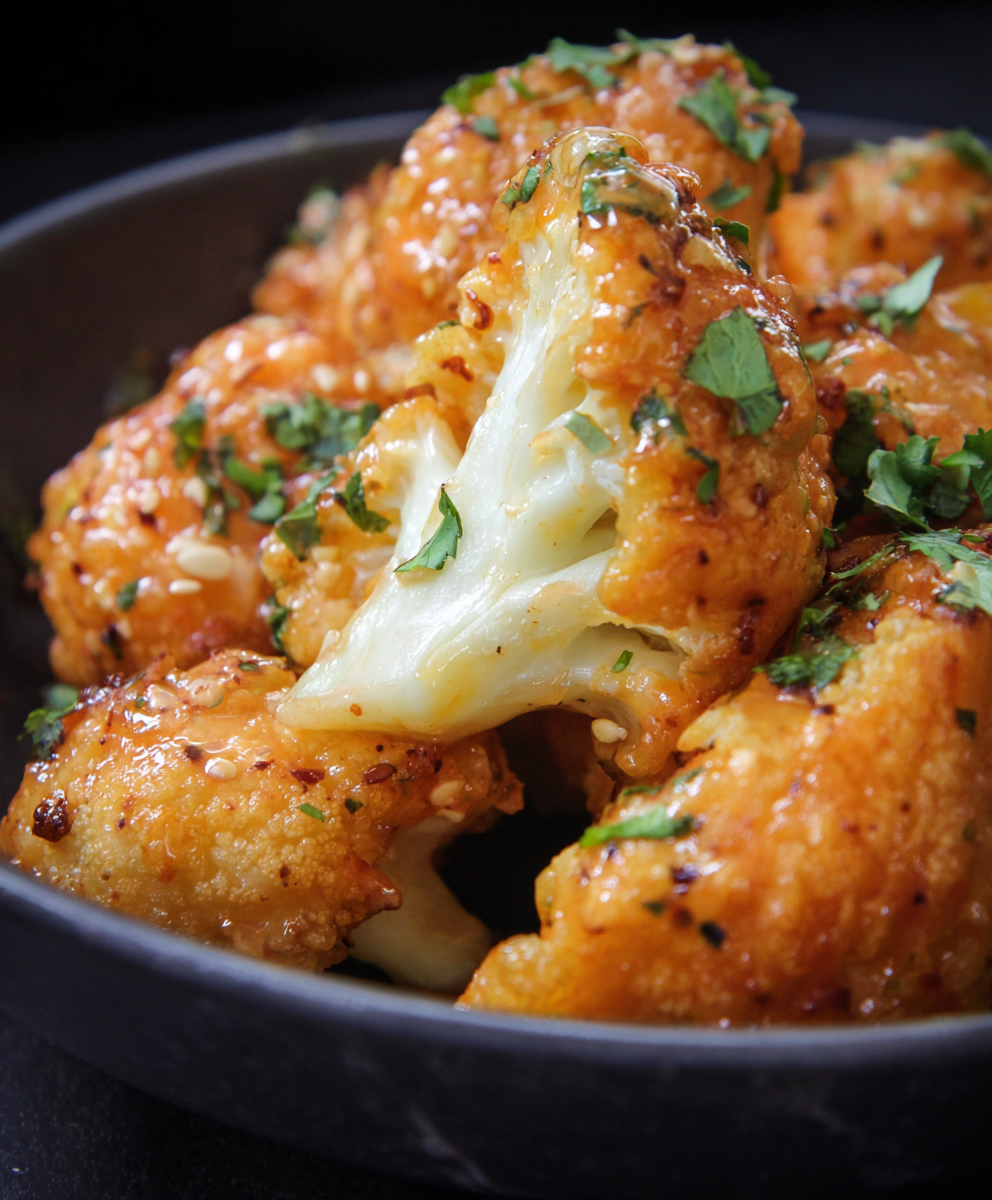
Air Fryer Bang Bang Cauliflower
Crispy air fryer cauliflower tossed in a creamy sweet-spicy bang bang sauce for a crowd-pleasing, quick appetizer or weeknight treat.
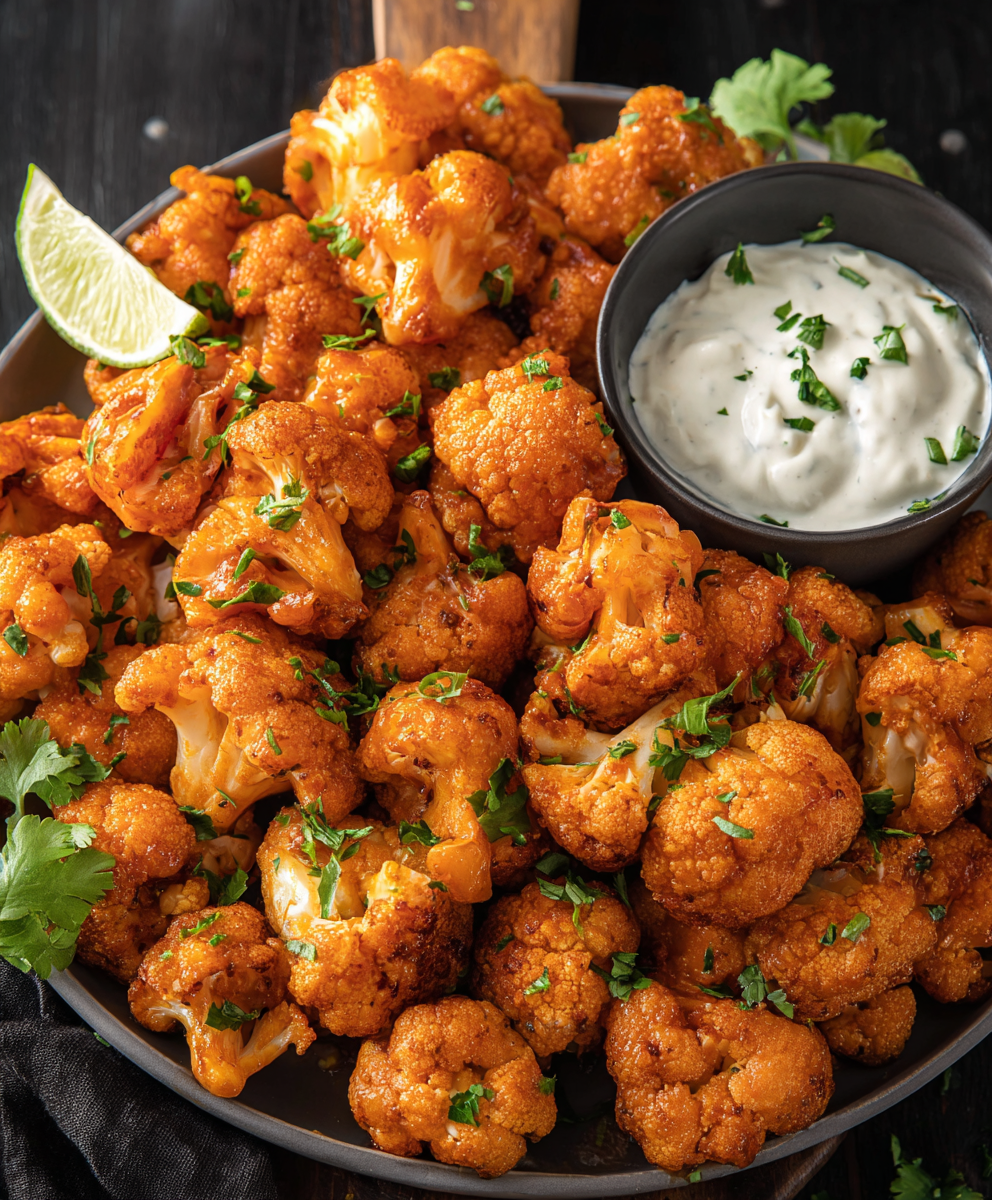
Air Fryer Buffalo Cauliflower
Crispy battered cauliflower florets tossed in a tangy buffalo sauce, ready in the air fryer for a spicy, crowd pleasing snack or light meal.
Air Fryer Honey Butter Garlic Chicken
Crispy, juicy chicken tossed in a glossy honey-butter-garlic glaze — ready in minutes with an air fryer for an easy weeknight favorite.
Did You Make This?
Leave a comment & rating below or tag @festive-cooks on social media!
Rate This Recipe
Share This Recipe
Enjoyed this recipe? Share it with friends and family, and don't forget to leave a review!
Comments (1)
This recipe looks amazing! Can't wait to try it.
Comments are stored locally in your browser. Server comments are displayed alongside your local comments.

Hi, I'm Jessica!
What's Popular
30-Minute Meals!
Join to receive our email series which contains a round-up of some of our quick and easy family favorite recipes.